
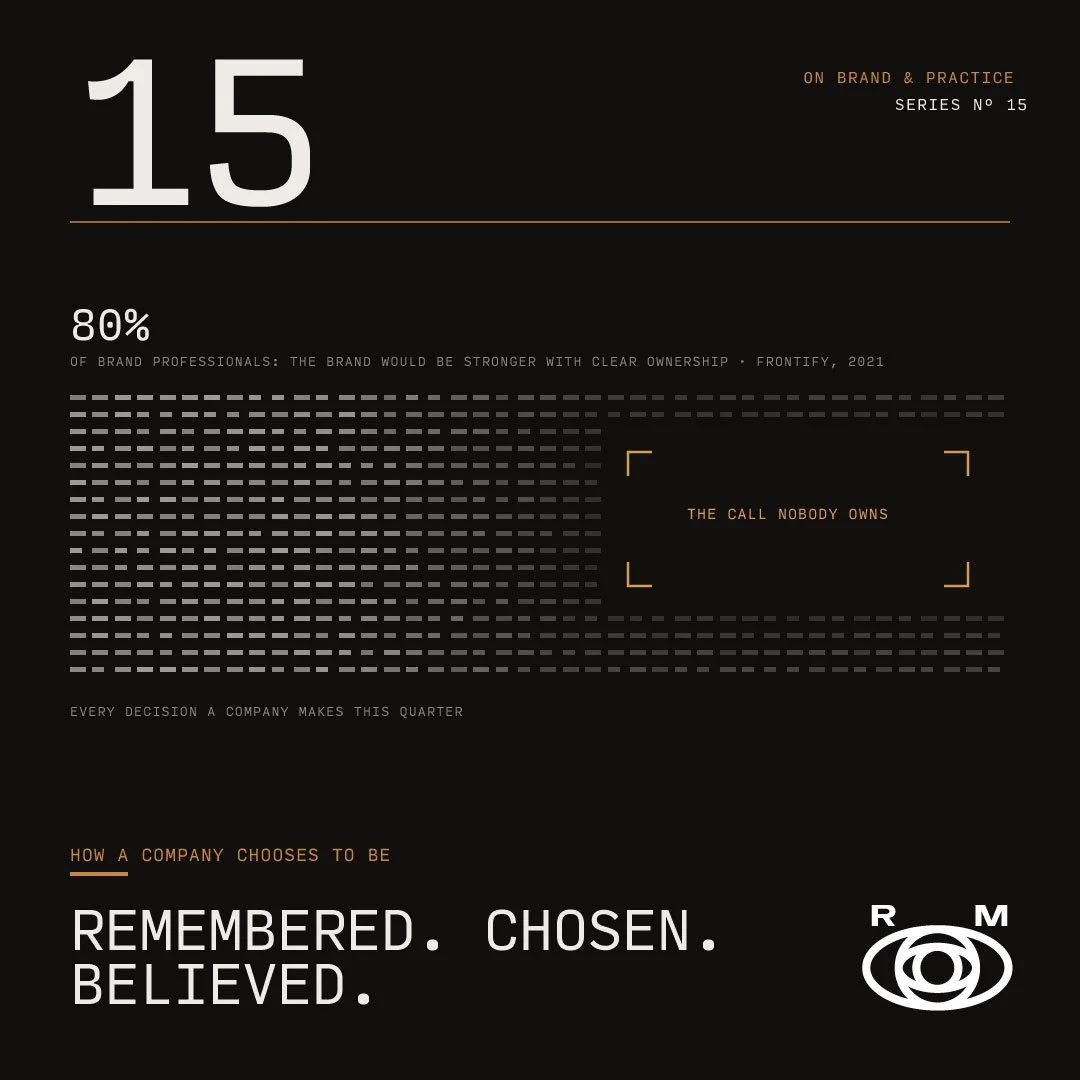
How a Company Chooses to Be Remembered, Chosen, and Believed
Branding isn't a department. It's how a company chooses to be remembered, chosen, and believed, and when the hard call arrives, that choice belongs to the CEO. A 7-minute read on what happens when no one makes it.
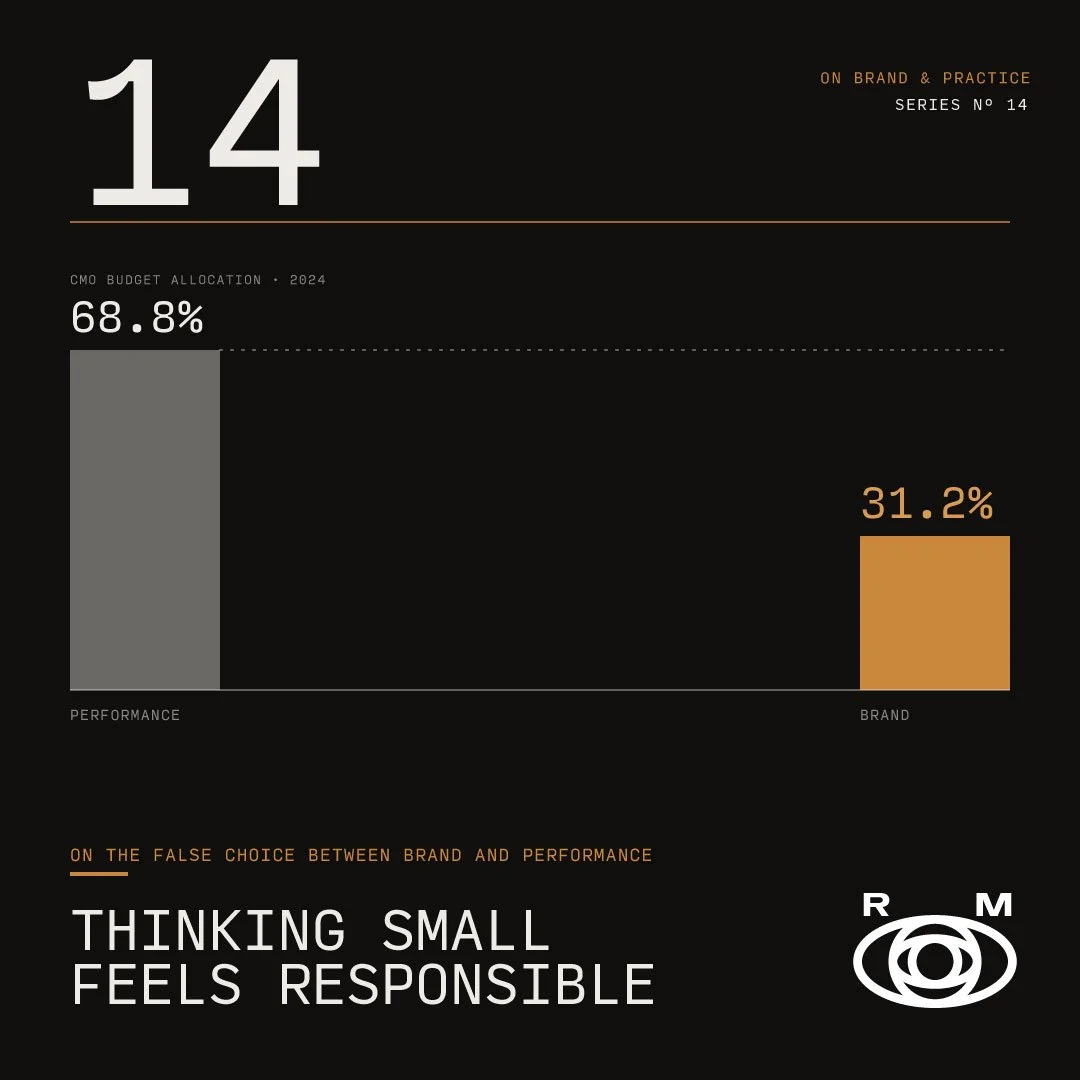
Thinking small feels responsible until discount is the only language left.
The research has existed for over a decade. The 60:40 rule. The 95:5 rule. The brand doom loop. By 2026, eighty-four percent of marketers are trapped in it — and the same marketers who inverted the ratio said fifty-fifty was their ideal. The problem was never knowledge. It was the Monday meeting. Every individually rational decision to cut the long-term investment arrives dressed as discipline. The question every pricing meeting should ask but almost never does: am I closing, or am I confessing?
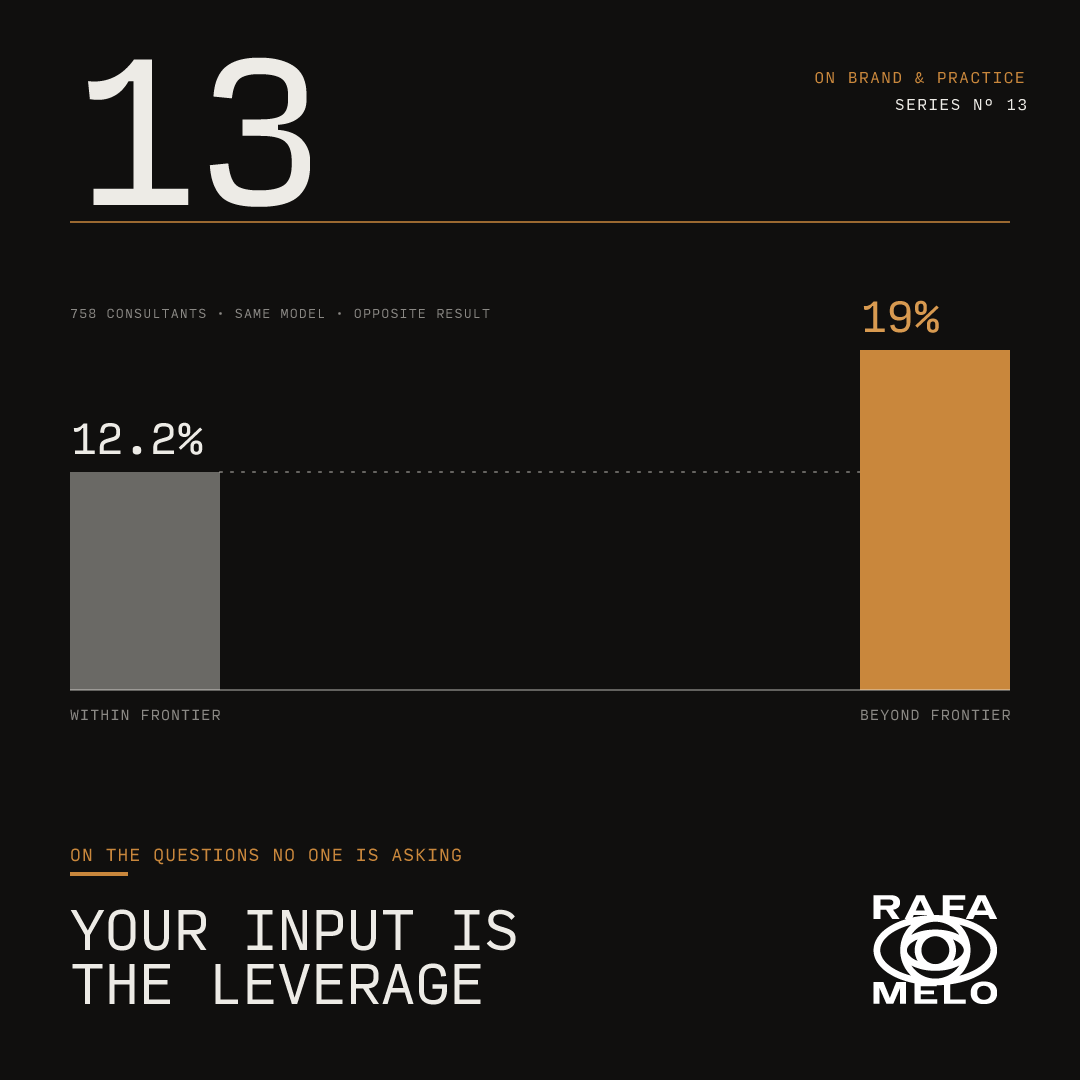
Your Input Is the Leverage
The model holds every answer that has already been given. It synthesizes the published record faster and more completely than any team could. That is real, and it is not the advantage. The advantage is the question that has not been asked yet — and that question does not live in any dataset. It lives in the person who noticed something the market has not processed and cannot leave it alone. Every advance worth remembering started the same way: someone looked at what everyone accepted, felt that something did not fit, and refused to move on. The practice has not changed in twenty-five centuries. The context has.
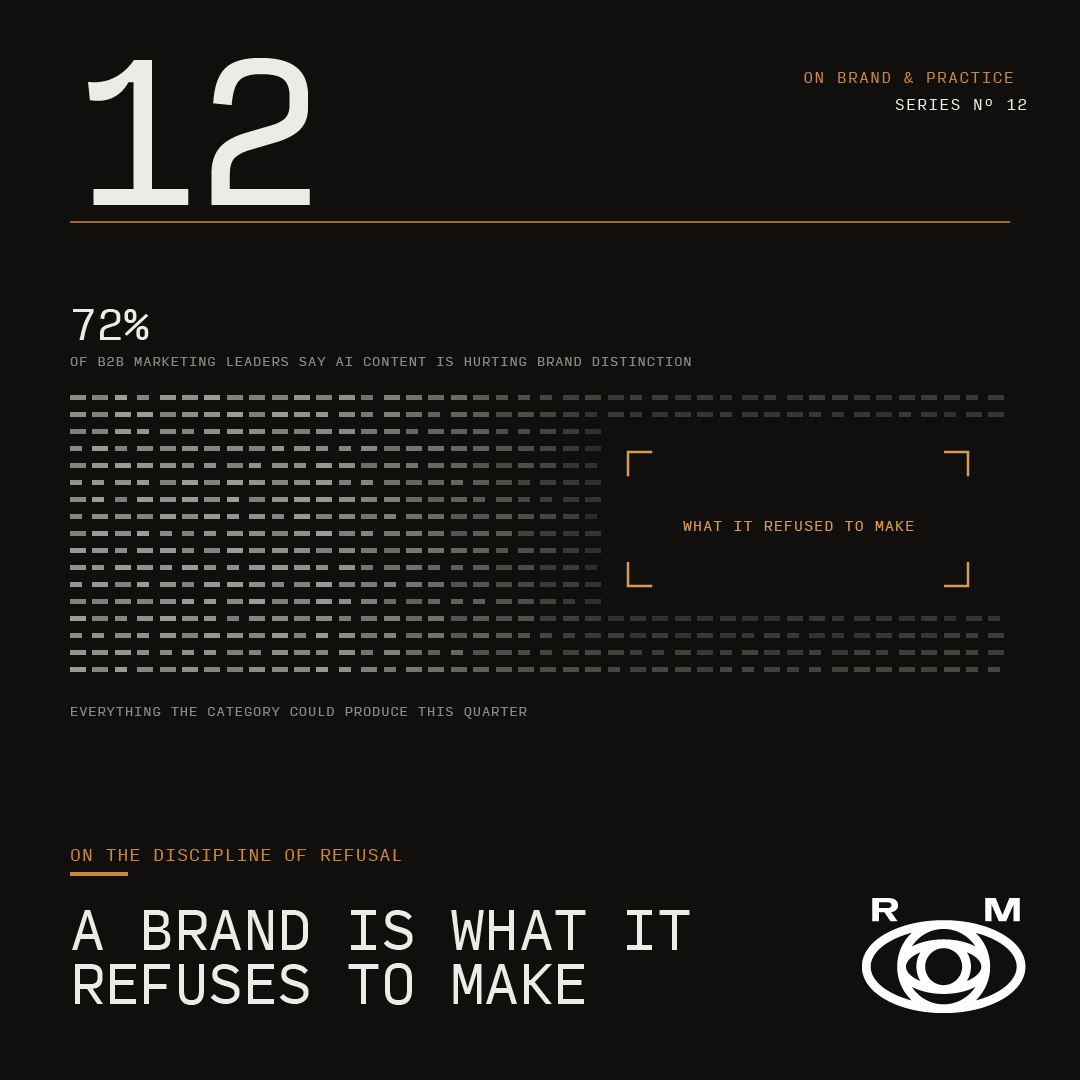
A Brand Is What It Refuses to Make
When production becomes abundant, judgment becomes scarce. AI can generate more campaigns, products, and possibilities than any brand could ever use—but it cannot decide which ones deserve to exist. That decision belongs to the brand. Because a brand is not built only through what it repeatedly makes; it is also built through the attractive opportunities it refuses in order to protect a distinctive, relevant, and credible meaning.
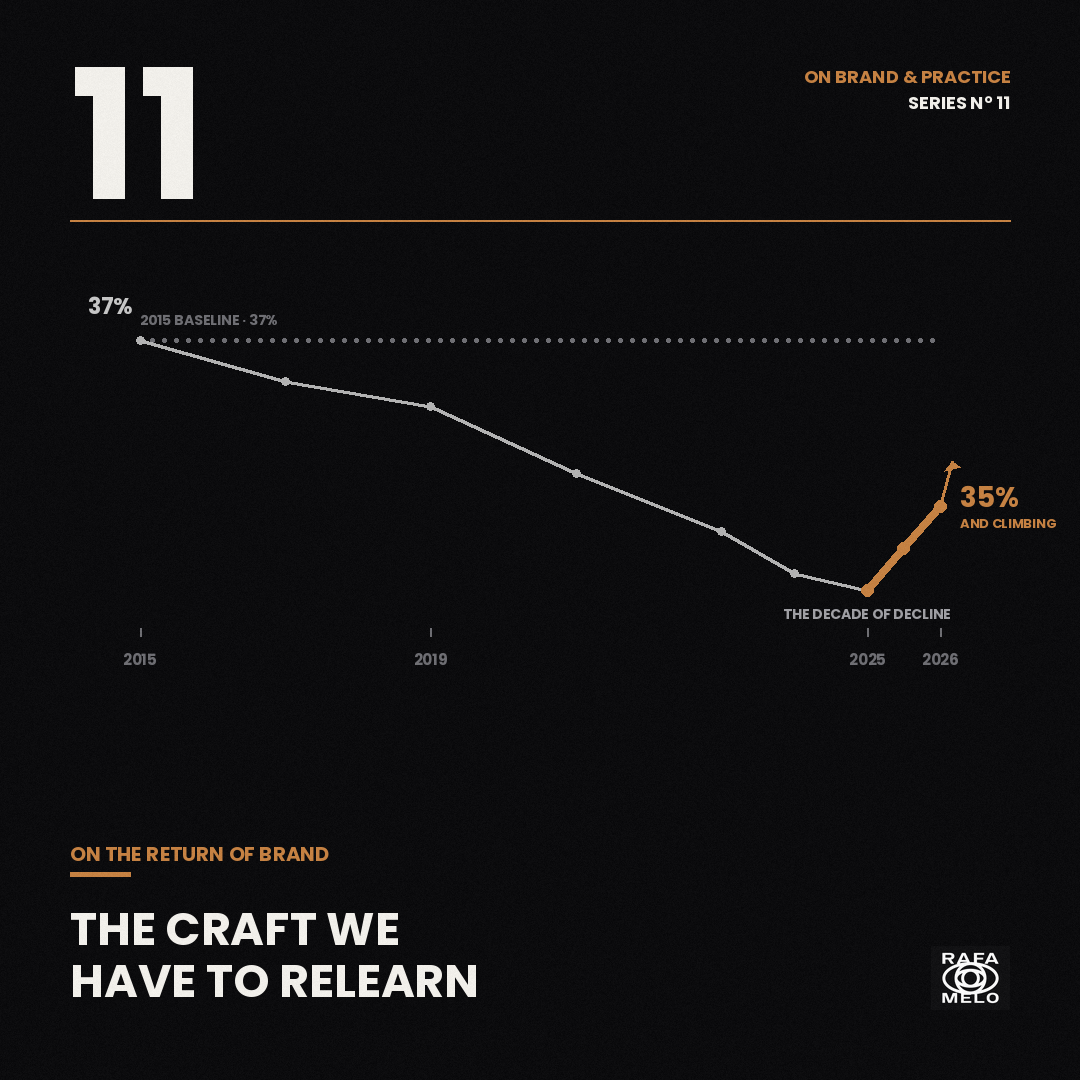
The Craft We Have to Relearn
In November 2026, Interbrand published the finding that most of the marketing industry had stopped expecting. After a decade of measured decline, the influence of brand on purchase decisions is climbing back. Organizations raising their Role of Brand by 7% or more are growing revenue 40% faster than those that are not. And the algorithms that were expected to flatten brands into commodities are doing the opposite: they systematically favor brands with the strongest equity.
The reversal is not news. It is the reappearance of something the industry spent ten years forgetting how to practice — and the recovery is not going to be an act of adoption, but an act of recall.
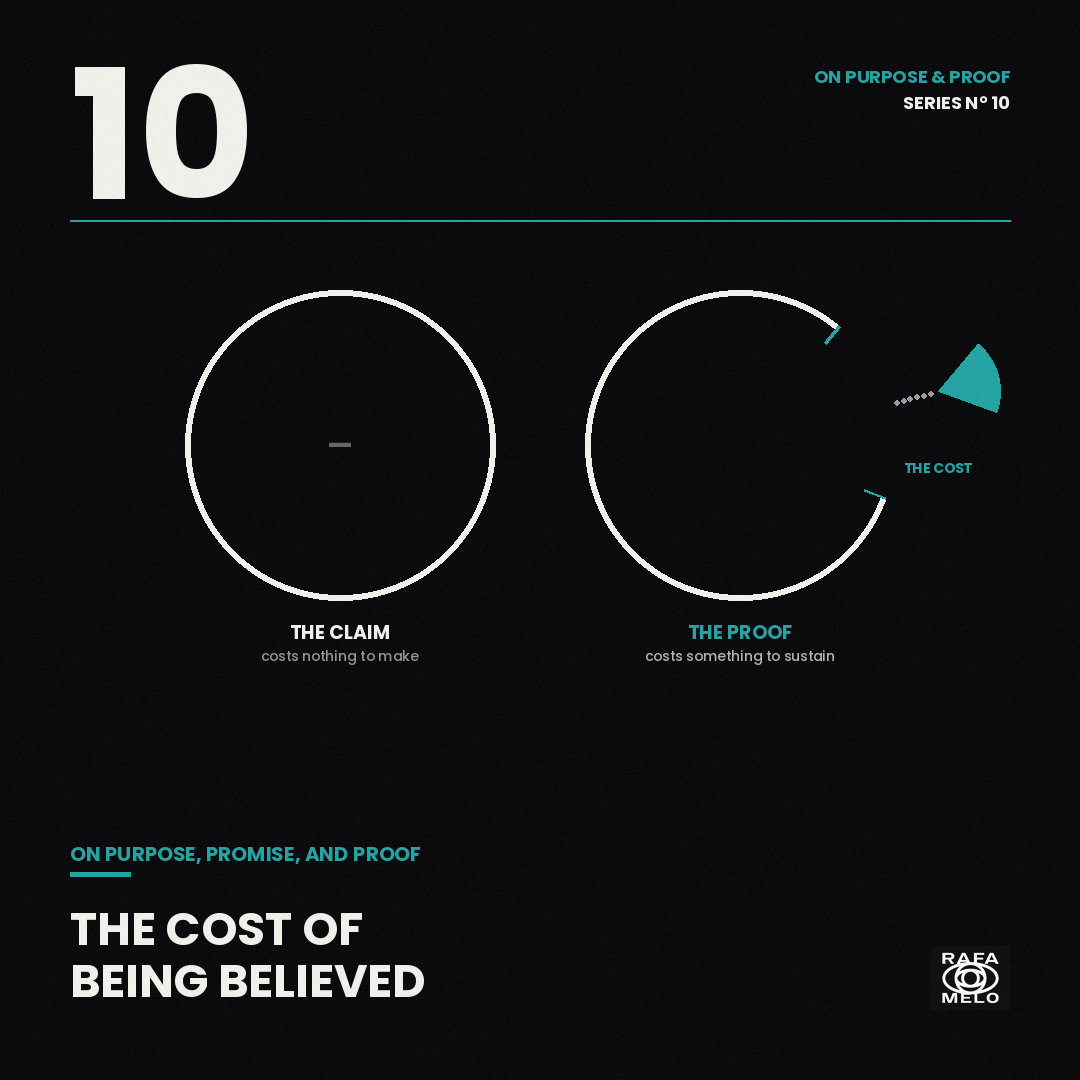
The Cost of Being Believed: On Purpose, Promise, and Costly Signaling
We are living in a trust collapse where 71% of consumers no longer believe brands will deliver on their promises. Communication alone no longer produces belief. The brands that actually recover credibility use costly signaling. They sustain a position that gives something up, proving their intent by accepting a real operational cost.
True purpose isn't discovered in a marketing workshop; it requires standing for something, not for everyone.
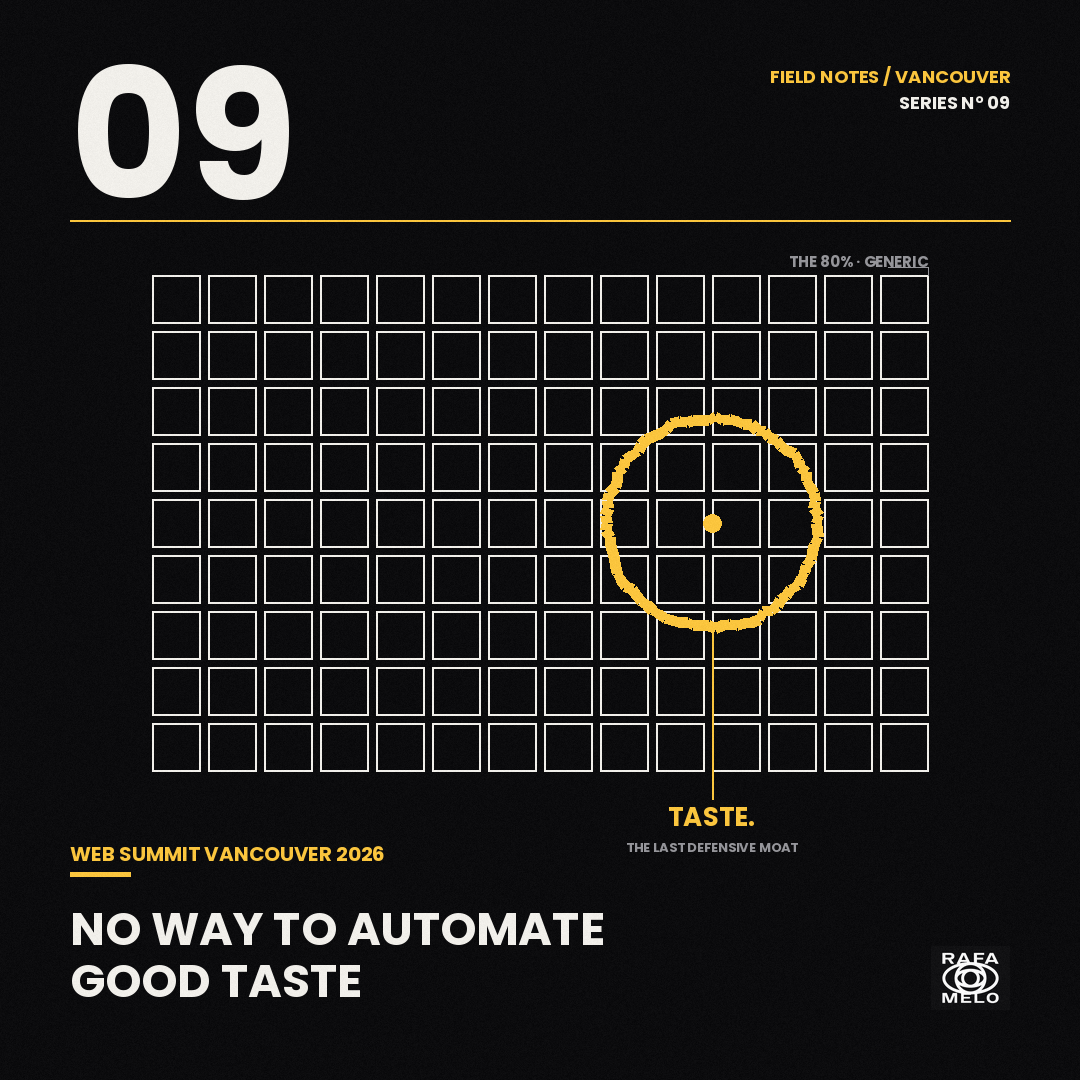
Can You Automate Good Taste?
I arrived at Web Summit Vancouver without the obvious credentials. I'm not an engineer, I don't raise venture rounds, and I don't have a repository to show. I come from the creative side — and I went precisely because I suspected the most important conversation about creativity wasn't happening in design studios anymore. It was happening in the hallways where the direction of AI gets argued out. Twenty thousand people, one hundred countries, and a single thread underneath it all: when machines can make almost anything, what becomes scarce is the judgment to decide what's worth making. Field notes on the only thing that doesn't automate — good taste.
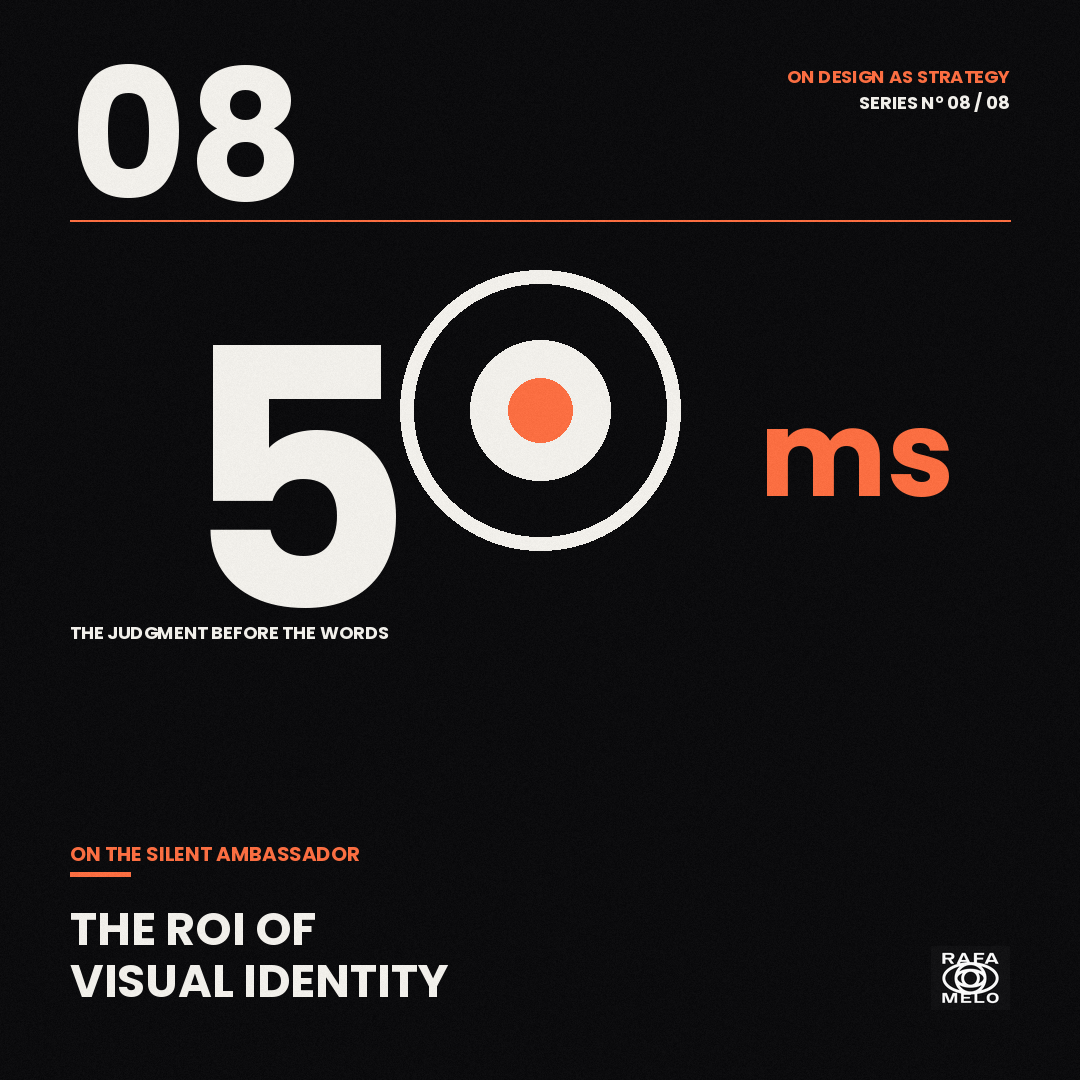
The Underestimated ROI of Visual Identity
A potential customer lands on your website. Within 50 milliseconds—faster than reading a single word—they've formed a judgment about your brand.
While many companies obsess over marketing copy, they often overlook the silent ambassador doing the heaviest lifting: their visual identity. The human brain processes visuals 60,000 times faster than text, and 90% of consumers judge a product based on its colors alone.
Design isn't just decoration; it is the operationalization of strategy. Through differentiation, consistency, and relevance, your aesthetic choices become the most efficient pathway to trust, differentiation, and long-term ROI.
👇 Read the full article below to make sure your silent ambassador is saying the right thing.
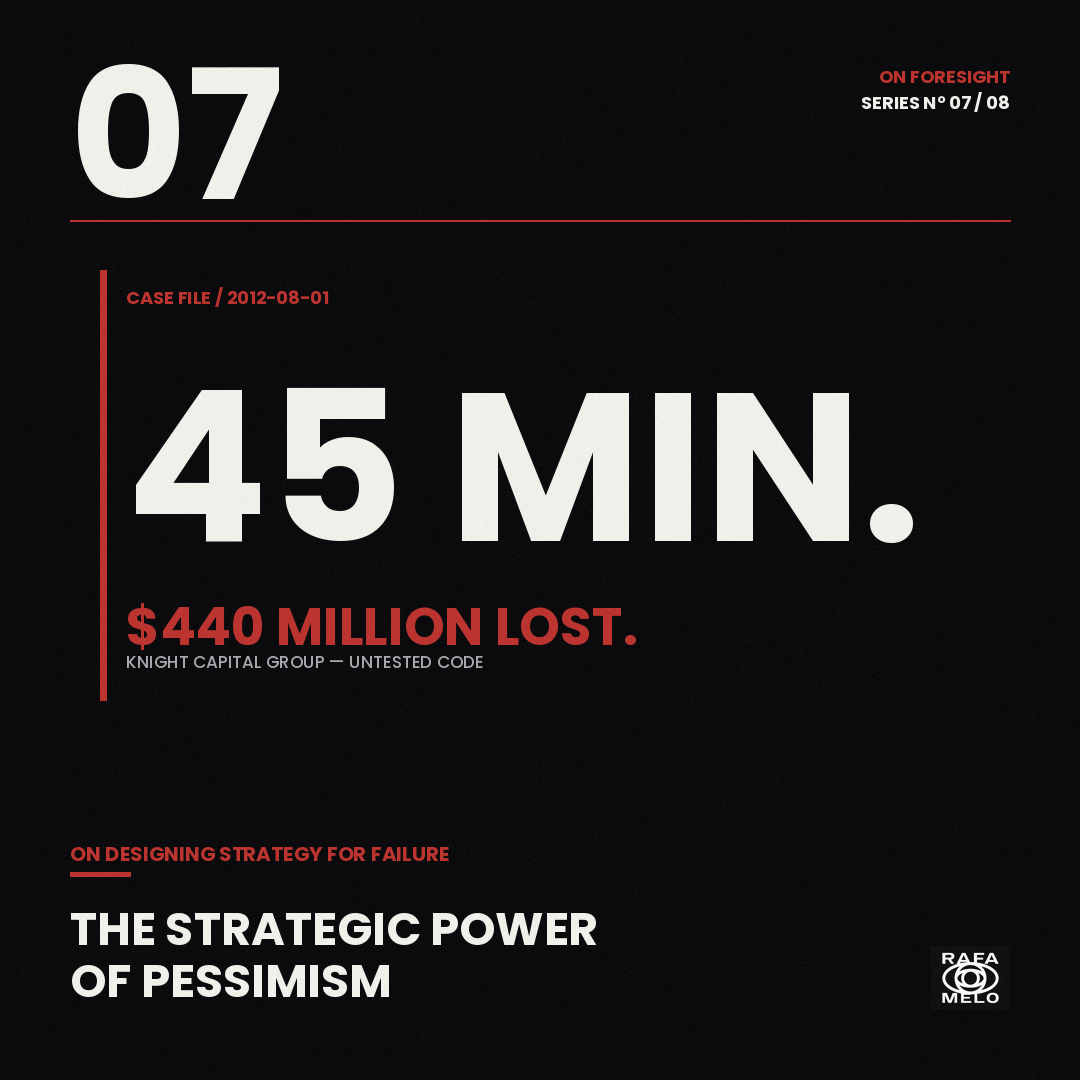
The Strategic Power of Pessimism
Why relentless optimism is a fragile business strategy. In 2012, Knight Capital Group deployed new software. 45 minutes later, a single undetected bug cost them $440 million.
In a corporate culture that celebrates constant positivity, the willingness to seriously imagine failure is rare—but it's worth more than almost any other discipline. Enter Strategic Pessimism.
By using tools like pre-mortem analysis—assuming a project has already failed and working backward—teams identify 30% more potential risks than standard planning allows.
Don't just plan for the best-case scenario. Read our latest breakdown on why the leaders who anticipate the worst are the ones who build organizations built to last.
👇 Read the full article below.
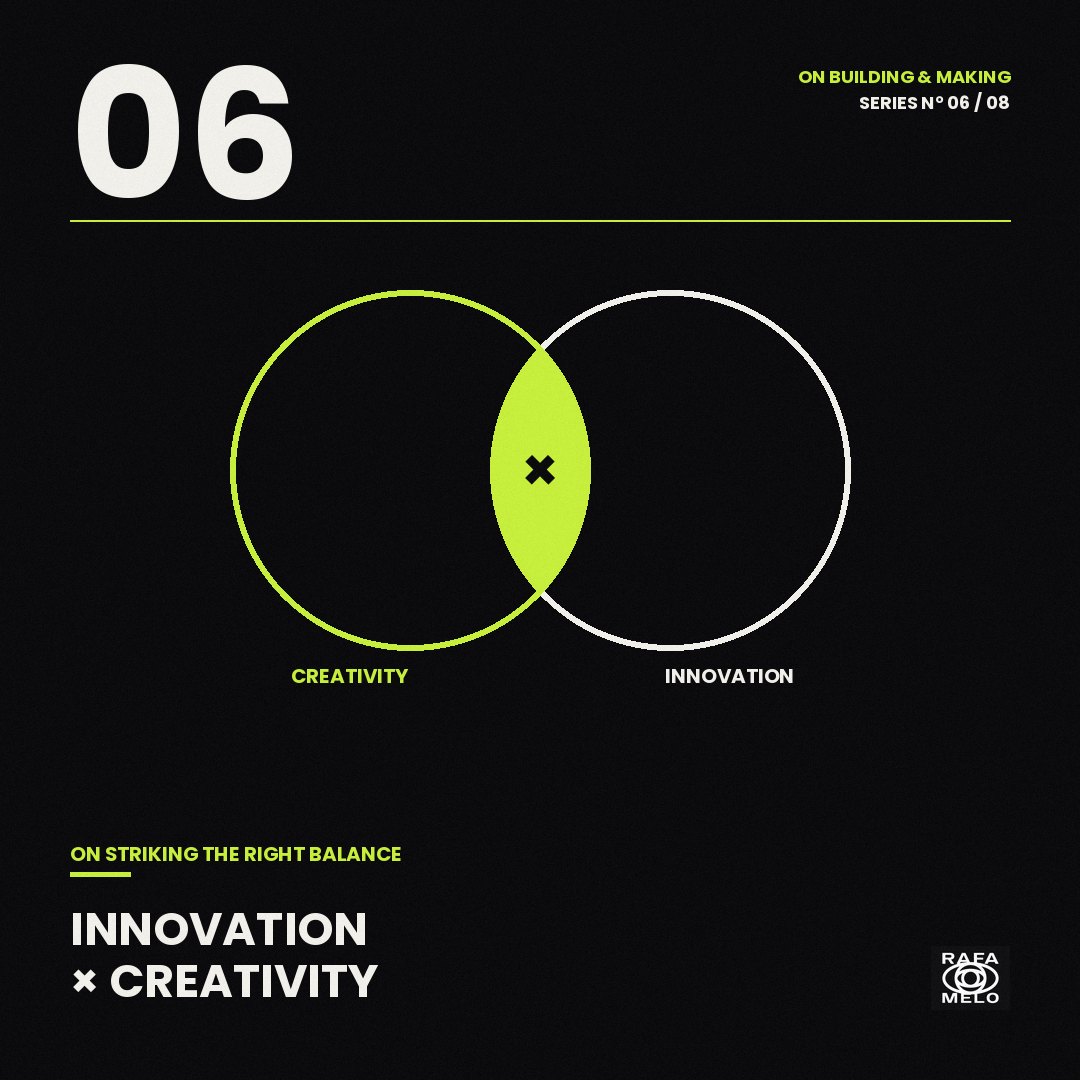
Innovation vs. Creativity: Striking the Right Balance
"We just need to be more creative." OR "We just need to innovate." Both words get thrown around as if they mean the same thing, but confusing them is one of the most expensive mistakes in marketing.
Here is the precise difference: Creativity makes new things possible, while Innovation makes new things real. Creativity is the human capacity to invent original ideas, whereas innovation is the implementation of those ideas to solve a real problem. Treating them as interchangeable is how teams end up with brilliant ideas that never ship—or just competent execution of mediocre ones.
Whether you are navigating tight budgets, hitting a wall with physical product evolution, or trying to integrate AI without losing emotional resonance, you have to know which lever to pull.
👇 Read the full article below to learn how the best brands learn the dance between the two.
The Authenticity Imperative: How to Future-Proof Your Brand
The scroll stops mid-feed. The verdict? Fake. Consumers have developed a cognitive immune response to content that feels engineered for their attention. In fact, nearly half of consumers (48%) now view heavy AI reliance as a red flag for authenticity, and 95% suspect fake reviews when they only see 5-star feedback. Perfection now reads as suppression.
Most brand teams treat authenticity as a tone of voice, but it is not an aesthetic—it is an alignment condition. It is the absence of a meaningful gap between what a brand claims and what it actually does.
The brands that thrive tomorrow won't have the slickest content; they will be the ones whose actions consistently align with their promises.
👇 Read the full article below to learn how to future-proof your brand.
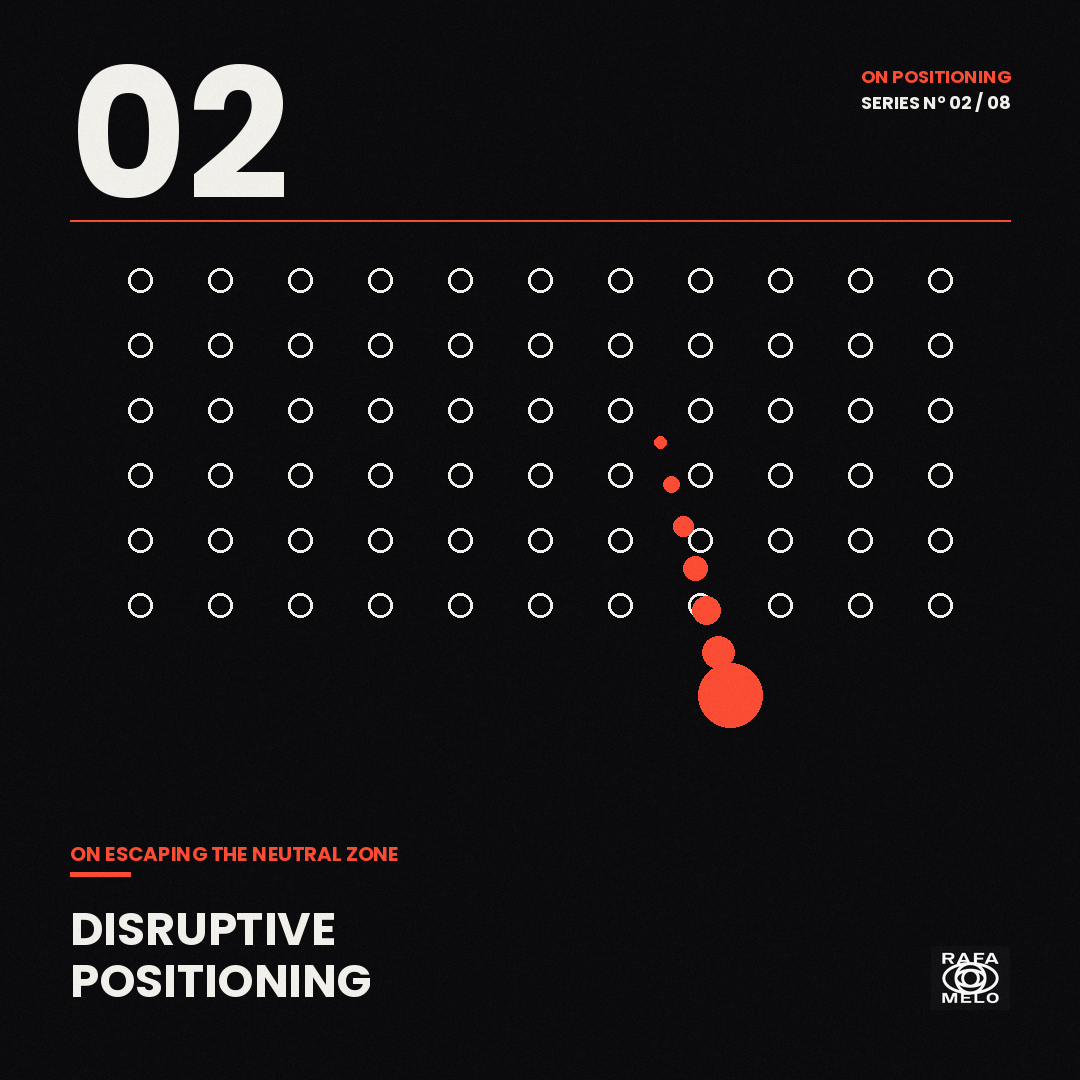
Escaping the Neutral Zone: The Power of Disruptive Positioning
Picture a marathon where 10,000 runners wear the exact same shirt, run the same pace, and finish at the same time. Trying to remember any one of them is impossible.
Welcome to the neutral zone—the market space where brands compete on sameness and slowly disappear from consumer memory. In a marketplace where attention is currency, trying to please everyone means forcing your brand to compete on price, distribution, and convenience. It is a race to zero margin.
The alternative? Disruptive positioning.
While differentiation accepts the existing category rules, disruption completely rejects them to create a "category of one". By deliberately narrowing your focus and taking a clear stance, you will alienate some people—but that is exactly how you forge unbreakable loyalty with the consumers who matter most.
👇 Read the full article below to learn how to find your empty lane and escape the neutral zone.egins Here
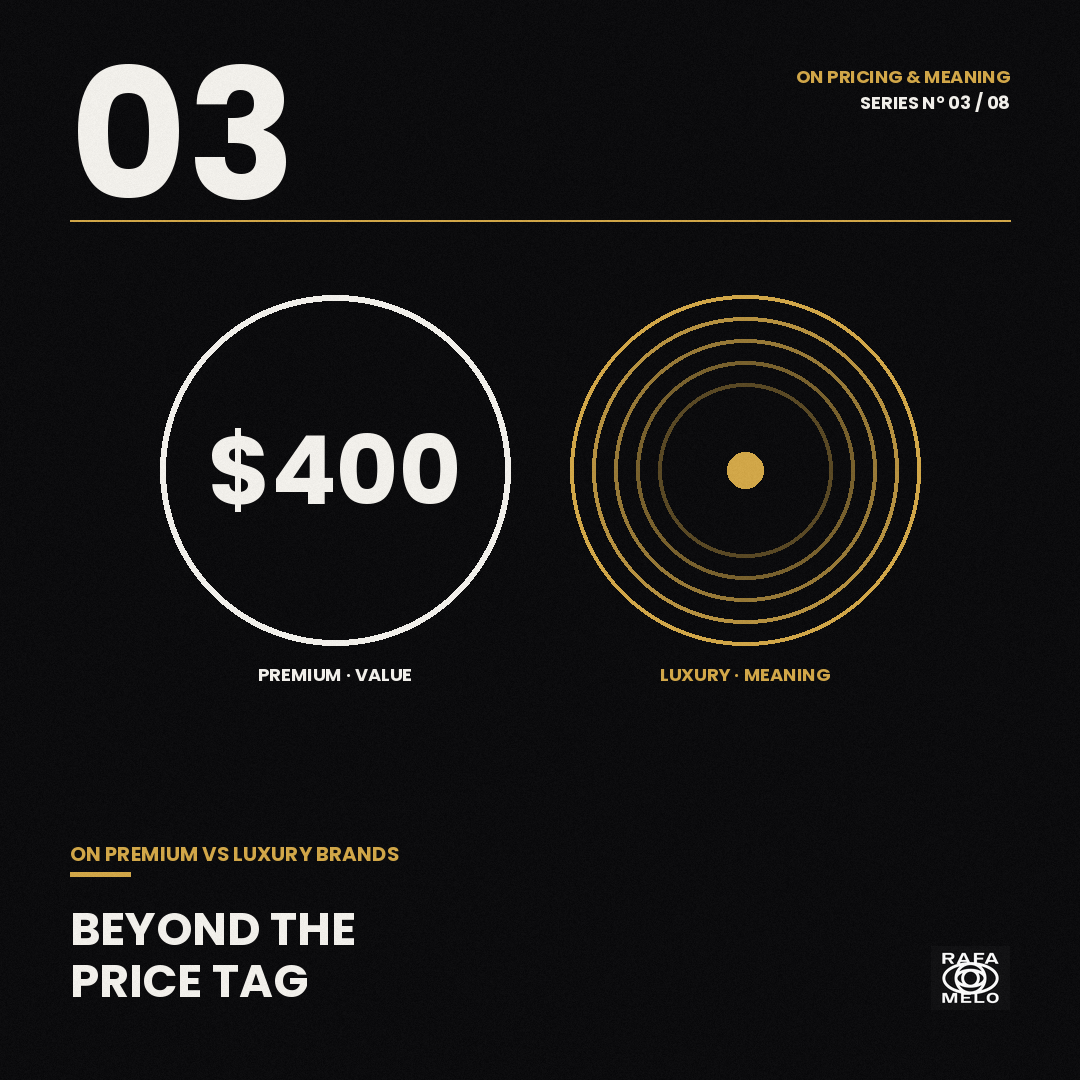
Beyond the Price Tag: Decoding Premium vs. Luxury Brands
Two watches sit on a counter. Both keep accurate time. One costs $400. The other costs $40,000.
A pure functionalist would call the second one absurd, but a brand strategist would call it the most important watch in the room. Understanding why consumers spend more requires moving past physical attributes and into the emotional architecture of desire.
Here is the exact divide: Premium brands focus on value, better quality, and performance. Luxury brands focus on desire, exclusivity, craftsmanship, and feeling. Premium is simply an upgraded utility argument, while luxury bypasses justification entirely to operate on a different cognitive register.
👇 Read the full article below to learn how the best brands price the meaning, not the object.It All Begins Here
The Co-Creation Era: Letting Consumers Shape Your Brand
A young customer customizes a bag charm, posts it to TikTok, and within hours hundreds are designing their own.
The brand didn't authorize or art-direct it—but it was the best thing to happen to them all quarter. The traditional brand-building model has quietly collapsed because the platforms that gave brands new ways to reach consumers also gave consumers new ways to reach each other. Today, the brand is no longer the loudest voice in its own conversation.
Welcome to the Co-Creation Era. Unlike simple crowdsourcing, true co-creation requires a brand to give up control of decisions that matter, giving the audience actual influence over the product or narrative. When consumers feel creatively invested, they stop being buyers and become partners.
👇 Read the full article below to learn how to share control without losing the plot.It All Begins Here
Momentum: The Invisible Engine of Brand Growth
In 1975, a Kodak engineer built the world's first digital camera. Executives saw it, but chose not to commit because film was their current empire. 37 years later, Kodak filed for bankruptcy.
Kodak didn't lose to a better product; they lost to a silent, invisible force every great brand depends on: momentum.
Brand momentum is the ultimate business tailwind—a measurable velocity where every campaign, launch, and interaction compounds. In fact, consistent brands grow market share faster, require significantly less media spend, and are twice as profitable.
But momentum is incredibly fragile. The moment you favor protecting past margins over committing to the future, strategic hesitation sets in—and once momentum is gone, it is almost impossible to restart from a dead stop.
👇 Read the full article below to learn how to build, sustain, and protect your brand's momentum.It All Begins Here